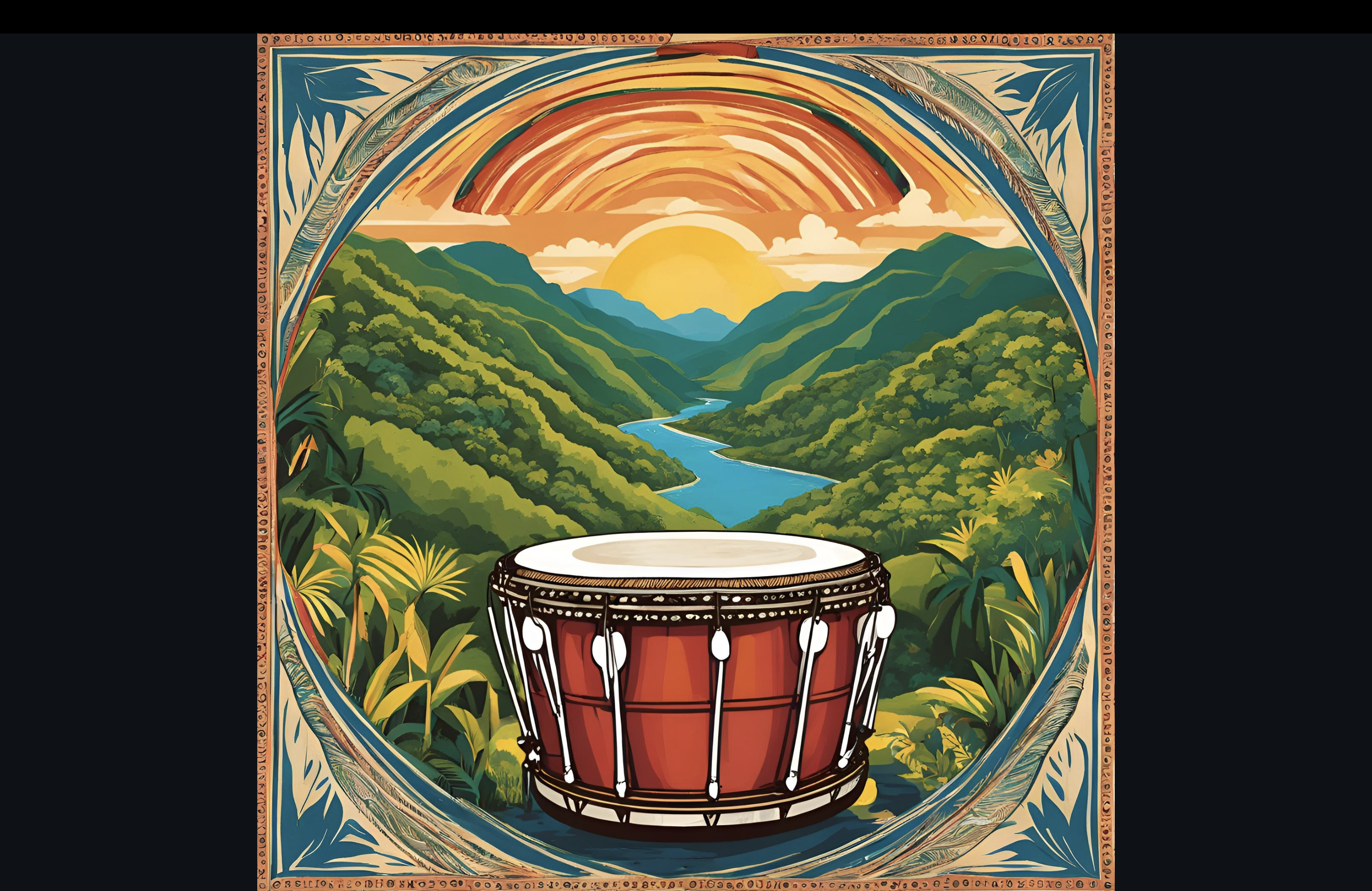
This is the Surdo with the lowest tone. In a Rio Bateria, it is known as the "primero", since it's the main pulse of samba.
It's very simple, as long as you know where the One is.
-
Two
-
Four
The Repenique starts it.
The player hits the stick on the metal for a synchopated rhythm.
The player plays "ONE, two, THREE, four with the bare left hand.
Here's an audio example:
Four hits.
Here's an audio example:
For in intro, play with the ensemble. The Repenique will then play the startup rhythm, and the Middle Surdo (Corti) will play three beats alone. The Repenique will play a short burst and the Corti plays one note. The following beat is the ONE.
The first note for the Low Surdo is on the TWO.
Here's an audio example of the full intro, including the start of the groove:
This is the four beat break. It is indicated by four blows of the whistle. The ensemble plays a sequence of one note, two, three, four and yells, "Hey". There is another sequence of one, two, three and four notes and the groove starts again.
Here's the count:
ONE! (two, three, four - the Repenique plays solo through these beats.)
ONE AND (two, three, four)
ONE AND TWO (three, four)
ONE AND TWO AND (three) "HEY!" (The "Hey!" is on beat four.)
ONE! (two, three, four - the Repenique plays solo through these beats.)
ONE AND (two, three, four)
ONE AND TWO (three, four)
ONE AND TWO AND (three). The Repenique plays "AND A Four" and the Corti plays "AND".
The following beat is the ONE of the groove with the Low Surdo playing it's first beat on the TWO.
Here's an audio example:
This break is indicated with TWO FINGERS.
After a series of fast singles, the Repenique plays a beat that is similar to the Corti beat (but a bit different.) The Surdos, Agogo, and Tamborim then repeat the exact same pattern two times. The Repenique and Caixa keep their groove going steady during this break.
Here's an audio example:
This ending is indicated with one long whistle, and possibly a fist in the air.
The Repenique then plays the key rhythm and the ensemble makes one, final hit.
Here's an audio example:
The Repenique plays the following, using two polyurethane sticks:
A t t A t t A t
A t t A t t A t
A t t A t t A t
A
Here's an audio example:
Two hits.
Here's an audio example:
After a few of the "Two Hit" responses, the Repenique plays a different phrase and the Corti responds with eight hits. The next beat is the ONE for the groove.
Here's an audio example:
This is from Bahia so the Low Sudo plays on the ONE and the THREE.
ONE
-
THREE
-
After the eight hits from the Corti, the groove starts immediately on the ONE.
Here's an audio example:
The Repenique plays the following pattern, then the Surdos all repeat it twice while the res of the group keeps going.
ONE - - -
- - - -
- - - -
FOUR E - A
ONE - - -
- - - -
- - - -
FOUR E - A
ONE - - -
TWO E - A -
THREE - - -
FOUR E - A
ONE - - -
- - - -
- - - -
- - - -
Here's an audio example:
The Repenique plays a six note pattern, and everybody hits the final note, which is on the ONE.
Here's an audio example:
- - - - - -
Hey - - - - Mi
guel - - - - -
Eat - Your - Chick en!
Four
Here's an audio example:
The Repenique starts it.
The player uses polyurethane sticks and plays three quick notes with five normal notes immediately following.
Here's an audio example:
The ensemble responds with TWO hits.
Here's an audio example:
Each response is TWO beats. After the Intro, the Agogôs play their groove, solo.
Here's an audio example of the full intro, including the start of the groove:
The High Surdo follows the bells, then the Medium Surdo, and finally the Low Surdo. The Repenique is the last to enter.
Here's an audio example of Surdos entering:
The break occurs when the Repenique plays the intro phrase loudly. The response is exacly like the opening.
Instead of Agogôs starting the groove alone, the whole ensemble goes back into the groove.
Note that the dynamics should follow the lead of the Repenique. If it plays loud, respond loudly. If it plays softly, play the response and the following groove softly.
Here's an audio example:
The Repenique then plays the break, the ensemble responds with TWO hits. If the Repenique player stops after that, the piece is completed.
Here's an audio example:
The notes are spaced, so they work best as a count, rather than a chant.
ONE - - -
- - - A
THREE - - -
- - - A
The overall melody from the three Surdos is...
A ONE (low)
A TWO (medium)
A THREE (low)
A FOUR (high)
A whistle plays the "Baby Woke Up! rhythm, then two quarter notes, four eighth notes, and the caixa follows with eight sixteenth notes. Immediately, the ensemble plays "Baby Woke Up!" The surdos and agogôs go immediately into their grooves.
The Low Surdo needs to play "A ONE" immediately after the "Baby Woke Up!" unison. I guess the Surdos represent the restless baby.
Listen for the Repenique and Timbal play the following call and response melody:
R: "I can go to the party, after the baby goes to sleep."
T: "When the baby goes to sleep?"
R: "I can go to the party, after the baby goes to sleep."
T: "When the baby goes to sleep?"
R: "When the baby goes to sleep?"
T: "When the baby goes to sleep"
R: "When the baby goes to sleep?"
T: "When the baby goes to sleep"
R: "I can go to the party, after the baby goes to sleep."
Starting on the word, "sleep", the caixa plays eight solo notes, while the ensemble is silent.
The ensemble then plays, "Baby Woke Up!", and the Surdos and Agogôs go back into their groove."
If the whistle blows four times before "Baby Woke Up!", that means the break is coming, and we DO NOT restart the groove. Here is the break:
R: "Paddy cake"
T: "Paddy cake. Baker's
All: "Man!" (One hit.)
R: "Bake me a cake"
T: "As fast as"
All: "You Can!" (Two hits.)
R: "Paddy cake"
T: "Paddy cake.
All: "Baker's Man!" (Three hits.)
Caixa: 8 hits
All: "Baby Woke up!"
The groove starts immediately, as normal.
The second time that the break is called, we play the full break and stop immediately after "Baby Woke Up!" To make sure, there will be a long whistle during the final caixa's eight notes.
The Repenique starts it.
The player uses a wooden stick and open hand.
The player plays a five note burst, another five note burst, then an eleven note burst. This is the Sergio Mendes break. One way to remember it is that "Ser-gi-o Men-des" has five syllables that are reflected in the five note opening phrase.
Here's an audio example:
The ensemble plays back the 5-5-11 note phrase.
Here's an audio example:
It's very simple, as long as you know where the One is.
-
Two
-
Four
For in intro, play with the ensemble. The Repenique will then play the startup rhythm, and the Middle Surdo (Corti) will play "FOUR AND". The following beat is the ONE, and the groove start immediately from there.
The first note for the Low Surdo is on the TWO.
Here's an audio example of the full intro, including the start of the groove:
This is the four beat break. It is indicated by four blows of the whistle. The ensemble plays a sequence of one note, two, three, four and yells, "Hey". There is another sequence of one, two, three and four notes and the groove starts again.
Here's the count:
ONE! (two, three, four - the Repenique plays solo through these beats.)
ONE AND (two, three, four)
ONE AND TWO (three, four)
ONE AND TWO AND (three) "HEY!" (The "Hey!" is on beat four.)
ONE! (two, three, four - the Repenique plays solo through these beats.)
ONE AND (two, three, four)
ONE AND TWO (three, four)
ONE AND TWO AND (three). The Repenique plays "AND A Four" and the Corti plays "AND".
The following beat is the ONE of the groove with the Low Surdo playing it's first beat on the TWO.
Here's an audio example:
This break is indicated with TWO FINGERS.
After a series of fast singles, the Repenique plays a beat that is similar to the Corti beat (but a bit different.) The Surdos, Agogo, and Tamborim then repeat the exact same pattern two times. The Repenique and Caixa keep their groove going steady during this break.
Here's an audio example:
This ending is indicated with one long whistle, and possibly a fist in the air.
The Repenique then plays the key rhythm and the ensemble makes one, final hit.
Here's an audio example: